Catégorie : New technologies

  • Scalable solutions: Best practices for computer vision model deployment

    Scalable solutions: Best practices for computer vision model deployment

    Modern technology continues to evolve at a rapid pace, prompting the need for robust, scalable solutions. Among these advancements, computer vision holds a significant place, enabling machines to identify, process, and interpret visual data. However, deploying these computer vision models involves a rigorous process, often fraught with challenges. Despite these hurdles, proper scalability can offer a more effective model deployment.

    Exploring Computer Vision Model Deployment

    As technology continues its relentless advance, the deployment of computer vision models has emerged as a critical subject in the technological landscape. This process involves training a computer to comprehend and interpret visual data, similar to human vision, and has a wide range of applications across various industries. From healthcare to manufacturing, from autonomous vehicles to surveillance, the ability to is transforming how tasks are performed and decisions made.

    Significance of Computer Vision in Today’s Technological Landscape

    With the advent of artificial intelligence, the deployment of computer vision models has gained significant traction. These models enable machines to identify and interpret visual data, leading to automation and efficiency in various operations. The deployment of these models has revolutionized numerous industries, including healthcare, manufacturing, and transportation, among others.

    Steps Involved in Deploying Computer Vision Models

    Deploying a computer vision model involves several stages, each of which are critical to the model’s performance. These stages include pre-processing the data, training the model, validating the model, and deploying the model. Each stage requires specific tools and platforms to ensure optimal performance.

    Challenges Encountered in Computer Vision Model Deployment

    Despite the benefits, deploying computer vision models presents several challenges, including data availability, model selection, computational resources, and scalability. Overcoming these challenges requires a thorough understanding of the deployment process, as well as the tools and platforms used in each stage.

    Scalable Solutions for Robust Computer Vision Model Deployment

    Computer vision model deployment at a large scale poses some challenges which can be mitigated by developing scalable solutions. Recent research and innovations in this field have paved the way for the successful deployment of these models within various industries. Industries that value the robustness of their computer vision models highly benefit from these developments.

    Role of Scalability in Effective Model Deployment

    A scalable solution allows for the efficient management of resources and reduces limitations associated with traditional computer vision systems. By optimizing performance, scalability helps in overcoming common deployment issues.

    Examining Robust Solutions for Model Deployment

    Robust solutions for model deployment are pivotal in maintaining and updating deployed computer vision models regularly. These solutions are backed by the latest tools and technologies, making them reliable for various applications.

    Improving Efficiency with Scalable Solutions in Model Deployment

    Scalable solutions play a significant role in improving efficiency during model deployment. The advent of machine learning and AI has further enhanced these solutions, paving the way for future developments in the field of computer vision model deployment.

    Computer vision’s influence on the tech industry and its future cannot be overlooked. By adhering to the principles of designing robust and scalable computer vision models, industries can harness the power of this technology while mitigating the associated challenges.

    Key Considerations for Scaling Computer Vision Model Deployment

    Scaling computer vision models poses a set of technical challenges that require strategic solutions. One of the main issues includes managing latency and bandwidth problems during large-scale deployment. High-quality hardware resources are an investment worth considering for efficient deployment. However, be mindful of the associated costs. It’s crucial to look at successful case studies of companies that have effectively scaled their computer vision models, providing valuable insights into the current trends in computer vision model deployment.

    Below are a few points that require careful consideration:

    • Optimization techniques to enhance computer vision model performance

    • Factors to consider when selecting a deployment platform for computer vision models

    • Common errors to avoid during the scaling of computer vision models

    • The significance of security and privacy in large-scale deployment

    • Recommended tools and technologies for large-scale deployment

    • The role of artificial intelligence and machine learning in scaling computer vision models

    Considering these technical aspects can help avoid unwanted issues during the scaling process. Additionally, understanding the implications of adopting large-scale computer vision on the future of the tech industry provides a broader perspective on the matter. Lastly, evaluating the effectiveness of deployed computer vision models is an essential part of the process.

  • What are the typical uses for PIM?

    What are the typical uses for PIM?

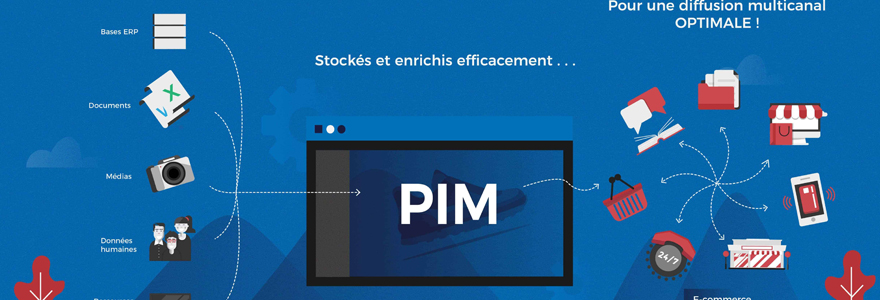
    PIM has a wide range of applications, from small businesses to large enterprises. It can be used to manage customer data, product information, pricing data, and more. PIM can also be used to integrate data from multiple sources, and to create a centralized repository of information.

    PIM is often used to manage product information for businesses

    Product Information Management (PIM) systems are often used to manage product information for businesses. PIM systems can help businesses keep track of product data, such as product names, descriptions, prices, and images. PIM systems can also help businesses manage their inventory levels and track orders. PIM systems can also help businesses create and manage product catalogs, goaland.com advises you more.

    PIM can also be used to track inventory levels, and to create and manage promotions

    PIM, or Product Information Management, is a software solution that is used to centralize and manage product data. PIM can be used to track inventory levels, and to create and manage promotions. Promotions can be created based on certain criteria, such as product category, price, or customer segment. PIM can also be used to generate reports, such as sales reports or inventory reports.

    Additionally, PIM can be used to generate reports, and to help with decision-making

    Product Information Management (PIM) systems are often used to generate reports and help with decision-making. Additionally, PIM can be used to keep track of product changes, to manage product data, and to ensure data accuracy and completeness. PIM systems can also be used to automate product data entry and to generate product catalogs.

    The article discusses the various ways in which PIM can be used in order to make life easier and more organized. PIM can be used for tasks such as keeping track of appointments, maintaining a to-do list, and storing important contact information. Additionally, PIM can also be used for more creative purposes such as brainstorming and developing new ideas.

  • What requirements traceability is and why it is important in the requirements lifecycle?

    What requirements traceability is and why it is important in the requirements lifecycle?

    Requirements traceability is the process of linking requirements to their originating source, and to other related requirements, throughout the requirements lifecycle. It is important to ensure traceability of requirements in order to maintain a clear understanding of the relationships between requirements, and to identify any gaps or inconsistencies in the requirements. Traceability also allows for impact analysis to be conducted, in order to determine the potential impacts of changes to requirements.

    What is requirements traceability and why is it important?

    Requirements end-to-end-traceability is the process of mapping and following the progress of requirements throughout the requirements lifecycle. The main purpose of requirements traceability is to make sure that all requirements are met and to identify any gaps in the requirements.

    Requirements traceability is important because it helps to ensure that the final product meets all of the requirements. It also helps to identify any areas where the requirements are not clear. In addition, requirements traceability can help to speed up the requirements gathering process by allowing requirements to be traced back to their source.

    There are many benefits to requirements traceability, but it is especially important in large projects with many stakeholders. In these projects, requirements traceability can help to ensure that all requirements are met and that the final product meets the needs of all stakeholders.

    What are the 3 types of requirements traceability?

    Requirements traceability is the process of mapping requirements to the source from which they came. There are three types of requirements traceability: forward, backward, and horizontal. Forward traceability is the traceability of requirements from the system level down to the component level. Backward traceability is the traceability of requirements from the component level up to the system level. Horizontal traceability is the traceability of requirements across different components at the same level.

    How do you ensure requirements traceability?

    Requirements traceability is the degree to which a system’s requirements can be traced back to its original source. It is important to have requirements traceability in order to ensure that the system meets the needs of the stakeholders and to make sure that all requirements have been addressed. There are various ways to ensure requirements traceability, such as using a requirements traceability matrix or requirements management tools.

    Traceability is the degree to which an entity can be traced to its origin. In the context of requirements, traceability is the ability to trace the lineage of a requirement from its inception to its current state. Traceability is important because it allows stakeholders to trace the impact of changes to requirements, and to trace the fulfillment of requirements throughout the product lifecycle.

  • Can I put a GPS tracker on my motorcycle?

    Can I put a GPS tracker on my motorcycle?

    If you’re wondering whether you can put a GPS tracker on your motorcycle, the answer is yes! GPS tracking devices are a great way to keep tabs on your motorcycle, especially if it’s prone to being stolen. By attaching a tracker to your bike, you can receive real-time alerts if it’s moved without your permission, and even track its location if it’s stolen.

    How can I track my motorcycle?

    If you’re looking to track your motorcycle, there are a few different GPS tracking options available to you. You can purchase a stand-alone GPS tracker that can be placed on your motorcycle or you can opt for a motorcycle GPS tracker that’s integrated into your motorcycle’s existing security system. You can also choose to have a professional install a GPS tracker on your motorcycle. If you’re not sure which option is best for you, it’s a good idea to consult with a motorcycle GPS tracking specialist.

    How do you install a motorcycle tracker?

    Yes, you can put a GPS tracker on your motorcycle. You will need to purchase a motorcycle tracker and then follow the instructions that come with the device like uploading the moto app. Most trackers come with adhesive mounts, so you will need to find a place to put the tracker on your motorcycle. Once the tracker is in place, you will need to activate it and then you will be able to track your motorcycle’s location.

    Where should I hide my GPS tracker on my bike?

    One of the great things about GPS trackers is that they can be placed almost anywhere on your motorcycle. However, some locations may be better than others. If you’re looking for a place to hide your tracker, here are a few ideas:

    -Under the seat: This is a great option if you have a seat with a lot of padding. Simply tuck the tracker into the padding and it will be out of sight.

    -In the fairing: Many motorcycles have a fairing, or a plastic piece that covers the engine. If your motorcycle has a fairing, you can probably tuck the tracker into it without anyone being the wiser.

    -In the storage compartment: If your motorcycle has a storage compartment, such as a trunk or saddlebags, this is a great place to hide the tracker. Just be sure to secure it so it doesn’t bounce around too much.

    -On the frame: Another option is to attach the tracker to the frame of the motorcycle. This is a fairly simple process, and it will keep the tracker out of sight.

    No matter where you decide to hide your tracker, be sure to test it out before you hit the road. This will ensure that the tracker is working properly and that you know where it is.

    Yes, you can put a GPS tracker on your motorcycle. There are many benefits to doing so, including being able to track your motorcycle’s location in case it is stolen, and being able to see your motorcycle’s location in real-time if you are on a long trip.

  • Can light be used as Wi-Fi?

    Can light be used as Wi-Fi?

    Sure! Can light be used as Wi-Fi? That sounds like a pretty cool idea, right? Well, it turns out that it is possible to use light as a Wi-Fi signal. In fact, a company called LiFi Labs has been working on this technology for a while now.

    So how does it work? Basically, a LiFi-enabled device would emit a light signal that could be picked up by a special receiver. This would then be converted into a Wi-Fi signal that could be used to connect to the internet.

    There are a few advantages to using light as a Wi-Fi signal. For one, it would be much harder to hack into a LiFi network than a traditional Wi-Fi network. That’s because the light signal would be contained within a specific area, making it much more difficult for someone to intercept it.

    Another advantage of using light for Wi-Fi is that it would be much easier to deploy in areas where there is no existing infrastructure for Wi-Fi. That means that it could be used in places like airplanes, trains, and even in rural areas.

    So far, LiFi technology Labs has been able to achieve speeds of up to 150Mbps with their technology. That’s not as fast as the current generation of Wi-Fi, but it’s still pretty impressive.

    It’s still early days for this technology, but it’s definitely something to keep an eye on. Who knows, maybe one day we’ll all be using light to surf the web!

    Light waves can be used to transmit data

    Yes, light waves can be used to transmit data. This is because light waves are electromagnetic waves, and electromagnetic waves can carry information. In fact, light waves are already used to carry information in many ways, such as in fiber optic cables and in lasers.

    What type of waves are used in wireless transmission?

    There are many different types of waves that can be used for wireless transmission, but the most common type of wave used for Wi-Fi is a radio wave. Radio waves are a type of electromagnetic radiation, which means they are created by electrically charged particles. Radio waves can travel through air, water, and solid objects. They are used to transmit information from one place to another, and they are used to create images on television and radio screens.

    Is Wi-Fi a light wave?

    In the article « Can light be used as Wi-Fi? » The answer to the question is yes, Wi-Fi can be a light wave. In the past, scientists have used light to transmit data between two points. However, they were limited by the speed of light. Now, with advances in technology, they are able to use different frequencies of light to transmit data much faster. The article goes on to say that the future of Wi-Fi may be in using light to transmit data. This would be beneficial because it would be much faster and would not require any wires.

    Yes, light can be used as Wi-Fi. This is because light can be used to transmit data wirelessly. This means that light can be used to create a Wi-Fi connection.

  • Tips and tricks for repairing your smartphone

    No one can be too annoyed because their smartphone is broken down or broken? To calm you down, know that, whatever the state of your smartphone’s abyss, it can be repaired. To do so, you certainly need a guide. Because on the Internet or not, repairs or changes to your mobile’s spare parts are feasible, but only in the right places. In addition, you can carry out the troubleshooting of your device yourself if you are willing and able. Find out how to repair problems with your smartphone.

    Advice from professionals to help you repair your smartphone

    No matter how broken or faulty your appliance is, today, repairing it is no longer an impossible task, neither for you nor for anyone else. Indeed, you will now find on the internet professionals who offer many free solutions to users of these devices. Whether you need a restoration or a repair, you will undoubtedly find advice and several tips.

    Restore your mobile phone yourself thanks to the tutorials

    To inform you, the simple use of the internet allows you to find the necessary repairs for your appliance. Therefore, from your home, you can take charge of the repair of your smartphone yourself. You will know how to do it well by learning it with free tutorials. But in order to do it successfully, you need to show more patience and interest. As with all training courses, success depends above all on the willingness and concentration of the apprentice in what he or she is learning. When you start something, keep going until you reach your goal. This is exactly the same as learning with video tutorials.

    Plus, you can use these training videos not only to repair your equipment. And you should know that there are several thousand very interesting tutorials on the Internet. To guide you, step by step, the free tutorials will teach you how to repair or refurbish your entire mobile phone. And with each demonstration, from A to Z, they can show you, for example, how to reactivate faulty touches. Also, in the tutorial images, you will discover: what the functions of all the spare parts of your smartphone are, how to dismantle them properly, and change them if necessary.

    Mobile phones can be repaired by the manufacturer.

    Undoubtedly, you can claim the repair of your smartphone from the manufacturer itself. Because this is your right. In particular, if you have bought your mobile phone with a guarantee and the damage to your device is included in the seller’s repair commitment. But the problem with these after-sales services is that the time offered is constantly quite short. Once this period has elapsed, you have to pay, out of your own pocket, the cost of repairing your device. However, the cost of repairing a mobile phone is always very expensive. Whereas, at any given time, your smartphone could break down. To avoid this, you are advised to take out insurance for all future repairs to your smartphone. This way, restoring your mobile will no longer be a source of annoyance for you.

  • Better manage your data science models

    Machine learning, big data and data science are technical terms that have become very popular in recent years. However, the perimeters used by each of these terms coincide, but their meanings differ. This could lead to confusion. The description of the workflow or workflow of a data scientist to build a data product. You will discover how to better manage its data, science models.

    What is Data Science?

    Data science, or better known as data science, is a recent term in the field of computer science. Specialisation allows companies to take advantage of their external and internal data on the Internet to make effective strategic decisions. The fields of work of this discipline are numerous and vast. In particular, product recommendation, research into fraudulent behaviour or pricing assistance. These intelligent techniques, known as data products, are predictive. These models are statistical types built through machine learning algorithms.

    Data mining

    The data mining phase facilitates the understanding of the data. Entering data means knowing its composition, interactions and distribution. One of the easiest ways to explore data science is to use descriptive statistics. In particular, indicators such as median, mean, quantiles, standard deviation and variance. These indicators provide a concise view of the breakdown of a characteristic. During the uni-variate study of statistical tools, data can be visualized using tools such as pie charts, moustache boxes and histograms. Cross-referencing the different features during visualizations makes it possible to envisage less obvious relationships to be examined in the first instance. 2D diagrams with point cloud appearance and even 3D diagrams give the possibility to see the distribution of different data in a multi-dimensional range. Ultimately, the goal of data exploration and visualisation is to assimilate the data. Another objective of these processes is to certify that the data set is cleaned and ready to be used and exploited by machine learning algorithms.

    A predictive data science model

    After the phase of data preparation, exploration and cleaning come the modelling phase. The objective of this stage is to design a statistical model adapted to predict the occurrence of a given phenomenon and provided. This model will be based on a standard data set of the phenomenon to be modelled. The Machine Learning system will teach these data to structure a statistical model. This type of model will be used to predict the outcome on a finding that it has not yet seen. The objective of this phase is to establish a model that is a better approximation of the concrete phenomenon that one is trying to model. Thus, the data scientist will try out several hypotheses and examine them to produce the best feasible model. Once a statistical model has been obtained and trained, the type of performance of the acquired model will be determined. Indeed, many people want to know to what extent the predictive model system propagates on data. Thus, the data scientist will apply a Testing Set which will facilitate testing the performance of this type of predictive model on data not seen during the learning phase. The Performance Calculation System will quantify how well the model behaves. The concept is that this kind of metric is easily interpretable and a concise value so that the data scientist knows how the type of model reacts.

  • Solutions for fast data recovery

    You have accidentally erased your data or your hard drive has died. Your data remains blocked without you being able to access it. Don’t panic, there are easy ways to retrieve your holiday photos or the minutes of your last meeting.

    Seek the help of a professional

    If your hard drive, server, or USB drive is down, you can turn to a data recovery specialist. With a laboratory and specialized equipment, they have a better chance of recovering your sensitive information without loss.

    In most cases, the diagnosis is free, as is the estimate. The price depends on the model of the hard drive, the difficulty, and the place of work (on the premises or at home). In general, an intervention varies between 40 € and 1500 €. As a general rule, your data is recovered with a guarantee with a hard disk data recovery expert in Paris.

    How to choose a data recovery specialist

    Entrust your hard drive to a professional with many years of service. Experience is a key factor in solving difficult problems.

    • Look for a specialist recognized by many users. You can do this by searching the Internet.
    • To avoid leaks of sensitive data, t is important that the professional complies with the charter of good practice.
    • Look first for a French laboratory, as it is subject to strict regulations and you can take legal action if it does not meet its obligations.
    • The company must not subcontract. Nor should it have any activities other than data recovery. In this case, you can retrieve the information from your PC or hard dsk.
    • You can also ask your friends or relatives who have already been through the same situation as you. You will certainly have a good address with an adequate price.
    • As far as prices are concerned, also use the comparison platforms to find out which one suits you best.
    • Recover this data without the intervention of professionals.

    Computer data recovery is a delicate undertaking, usually entrusted to hard disk data recovery experts. But these services are expensive and you risk becoming a victim of data leakage. In this case, you have another option, computer data recovery software.

    Once your computer has returned, recovery depends on the situation

    Sometimes images, videos, and important documents are accidentally erased from the sin, USB key, or memory card. There is no need to worry, as there is a wide range of file recovery software available on the Internet that can recover deleted documents, videos, audio, photos.

    If the hard disk is in perfect condition, but the PC is dead, simply connect it to a new machine – this is the simplest case. If you are not familiar with the installation of the hardware, you can follow tutorials on streaming sites. If your hard disk is damaged, you can always recover your important files and transfer them to another medium. Many software programs exist to recover a large amount of data. They can access the data despite the poor condition of the disk. Their effectiveness depends on the algorithm used. They are often necessary for a user with no experience in the field. But tools for professionals are also on the market.

  • Find the best online tracking and mobile computing solutions

    There are many tools available online for traceability. More and more people are opting for this solution because it is relatively simpler and more practical. You can follow your products from production to their final destination. Some procedures allow you to know instantly the evolution of the market and trace the routes of each of your goods. There are several service providers and companies that offer these services online.

    Why use traceability and mobile computing?

    With traceability and mobile computing, a relationship is established between the physical flows and the information for each of the goods. This solution offers many advantages. For companies, it helps them to see the critical points that hinder productivity. It becomes much easier to recognize the weaknesses of each procedure to reduce mishandling or update the method used. In this way, the quality of customer service can always be increased and productivity improved.

    About the consumer, he or she will be able to have more confidence in the company, whether it is for a service or product purchase. This is a very beneficial element in recognizing customer satisfaction to keep their loyalty. With the implementation of a traceability system, it becomes easier to reassure the consumer when he confirms his purchase. You feel more confident when you have a link that allows you to follow the evolution of the purchase you have made, especially if it required a large investment.

    For legal frameworks too, there are sectors in which the product traceability solution is compulsory. This is for example the case for the food and pharmaceutical industries. Thus, every company working in this field is obliged to set up an effective tracking system.

    Product traceability solutions

    To achieve product traceability, they must first be given codes that identify each of the mobile goods, such as labeling. They must be recorded in software to facilitate their management. Among the most common methods are barcodes and radio frequency identification.

    Secondly, there is the system with data capture and recording. After assigning special codes to each product, the data must be captured and scanned. This will facilitate automated tracking and storage.

    Thirdly, there is the installation of software to process the data. It is necessary to ensure that the actual information in the field matches the scanned data. This is why special tracking software must be used. They allow the collection and storage of all data on all products. They are also used to structure the information so that it is usable. They also create relationships between the product and the actors involved.

    How to find a reliable company for tracking and mobile computing?

    To find a company that can manage your tracking and mobile computing system, you need to impose a few selection criteria. As soon as you launch the search on an engine, you will find several results. Start visiting each traceability solution for companies whose name you are not familiar with. Also, the company must legally exist and already work with several customers who can testify to its credibility. Notoriety is very important to be sure of the quality of service and reliability.

  • News about Smartphones and other technologies

    In the 1980s, mobile phones were only used for basic functions, i.e. calling and texting. Nowadays, thanks to technology, the smartphone is appearing. It can be used to do many things, for example, take pictures, listen to music, connect to the Internet, and so on. And today it is getting better and better. What is its progress? And what are the benefits and harms of technological progress?

    The evolution of smartphones

    The history of the smartphone began in 1993. It was born out of the collaboration between Bellsouth and IBM. They mixed the mobile phone and the PDA. However, this is not very practical. The Nokia 9000 appeared in 1996. The difference between it and other phones is that you can open it and in it there is a keyboard and a screen, seen as a sort of miniature computer. It can be used for various functions, such as text messaging, e-mail, and the Internet. The year 2000 is the most important in the history of smartphones. It was the period when the first operating system was used on a telephone. In 2002, it was the appearance of the Blackberry 5810, which was launched by RIM. It was the first device that could receive and send e-mails. In 2007, thanks to the iPhone, a touch screen, the term smartphone took on a familiar meaning. Afterward, the major phone brands worked to compete with the first iPhone.

    New smartphone technologies today

    Currently, thanks to new technologies, there are many new phone designs. And even the most recent ones are quickly becoming obsolete. The aim of these advances is more often to make life easier for users and also to be able to manage most devices using a smartphone. Some manufacturers, for example, can make an application that can command and control household appliances. Soon, smartphones will no longer need loudspeakers, as sound will be transmitted by tissue or bone conduction. This technique consists of sending sound waves once the smartphone touches the owner’s ear. The sound immediately reaches the eardrum via the ear tissue and bone. This makes it easy to hear the person you are talking to, no matter where you are or what your surroundings are. So, for people with sensory disabilities, a team of Ukrainian professionals has discovered a system that can translate sign languages, after transferring it as a voice message to a smartphone.

    The benefits of technology on smartphones

    In terms of communication, the smartphone is a technological advance, as it allows you to stay in touch at all times with anyone, even in remote locations. In an emergency, it is very useful for asking for help. Thus, it is a way to stay in theoretical contact at the same time as the whole world and also to reach acquaintances. There are also social network systems where you can find several friends. Then, at the level of ease of use, thanks to the development of intuitive software, the use of smartphones is becoming increasingly easy. In case of failure, there is a lot of hardware available for repair. Again, access prices are affordable to the middle and poor classes. Generally, in developed countries, they are cheaper. But technology also brings with it several dangers. What are they?